Midkemia · Kelewan · Garn

Raymond E. Feist

First Edition Field Reference · 2026

35 novels · 15+ million copies · 1982–present
Riftwar Cycle · Firemane Saga · Dragonwar Saga

Other Works

Short fiction · comics · video games · tabletop RPG · novellas · essays · standalone novels · collaborative works. Everything outside the core novel series.

Standalone Novels

Outside the Midkemia universe entirely. Written between the first and second Riftwar books.
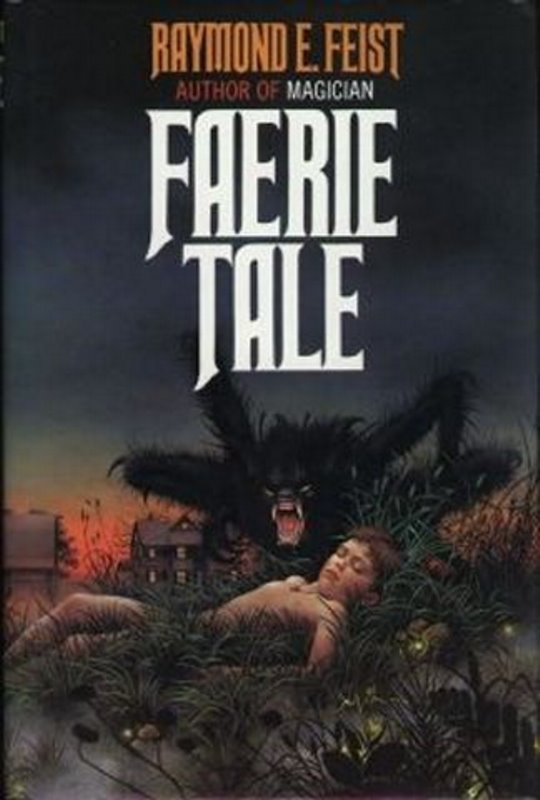
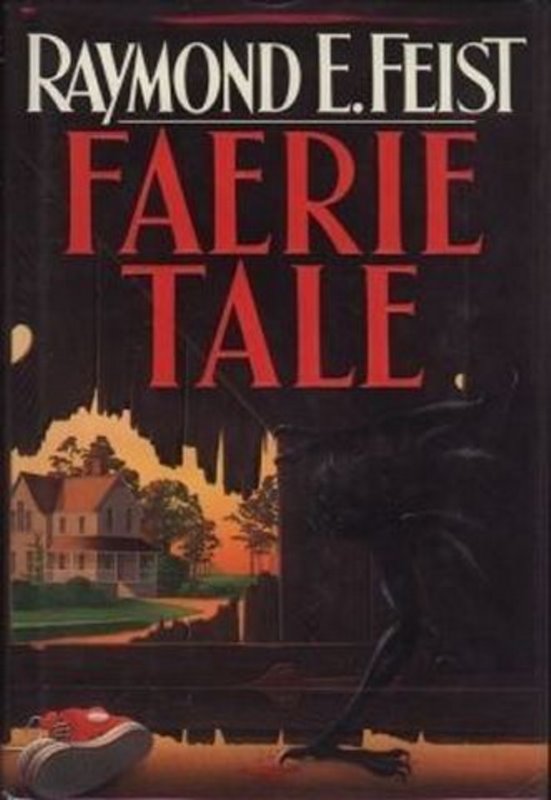
Faerie Tale US 1st (Don Maitz, 1988) Faerie Tale UK 1st (Robert Giusti, 1989)
Faerie Tale (1988)
Standalone horror novel set in the Hudson Valley, NY — nothing to do with Midkemia.
US: Doubleday, November 1988 · ISBN 0-385-24421-6 · Cover: Don Maitz (left). UK: Grafton/Collins 1989 · Cover: Robert Giusti (right). A family moves into an old farmhouse; faeries in the classical folklore sense (malevolent, darkly dangerous) are involved. Feist's only novel outside the Riftwar universe. Significantly underperformed commercially vs the Riftwar books; out of print for extended stretches. US DJ states "First Edition" on copyright page. Hard to find VF/NF as most copies were heavily read.

Legends of the Riftwar (Collaborative Novels)

Three novels co-authored with other fantasy writers, set during the first Tsurani invasion. Fill gaps in the background of the main Riftwar Saga. UK HarperVoyager HCs are the true firsts for all three.
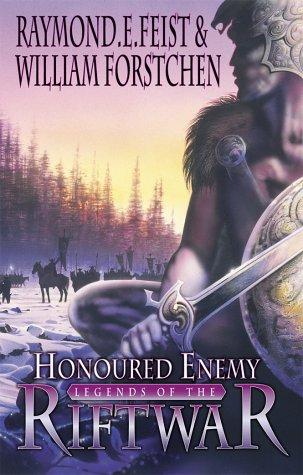
Honoured Enemy UK 1st (2001)
Honoured Enemy (2001) — Feist & William R. Forstchen
UK: HarperVoyager, 2001. US: Aspect, 2001. Legends of the Riftwar #1.
Two enemy soldiers — Kingdom sergeant Dennis Hartraft and Tsurani warrior Asayaga — must ally to survive a greater threat in the frozen Northlands. Set during the first Riftwar entirely in wilderness terrain. Forstchen wrote the military mechanics; Feist provided world framework and approval. True first is the UK HC.
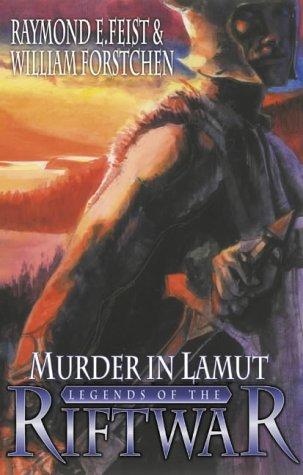
Murder in LaMut UK 1st (2002)
Murder in LaMut (2002) — Feist & Joel Rosenberg
UK: HarperVoyager, 2002. US: Aspect, 2002. Legends of the Riftwar #2.
Three mercenaries snowed in at LaMut discover a murdered noble and a locked-room mystery. A rare fantasy-detective hybrid. Rosenberg wrote the mystery plot mechanics; Feist provided the world. The LaMut setting gets its most detailed portrayal in the entire cycle here. True first is the UK HC.
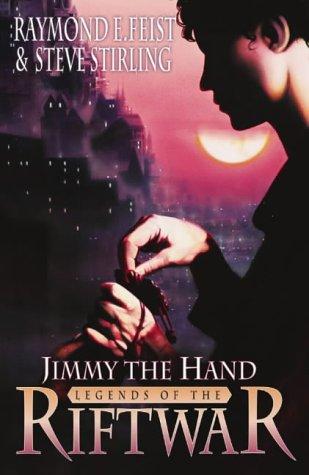
Jimmy the Hand UK 1st (2003)
Jimmy the Hand (2003) — Feist & S.M. Stirling
UK: HarperVoyager, 2003. US: Aspect, 2003. Legends of the Riftwar #3.
Jimmy as a young thief in Krondor's Mockers guild, before the events of the main Riftwar Saga. A Nighthawk assassin plot weaves through court intrigue. Stirling wrote the plot mechanics; Feist refined Jimmy's characterization to match the main novels. UK HC is the true first by several months.

Short Fiction

Feist published very little short fiction — fewer than 10 pieces total over four decades. Short fiction was never his primary form.

Profit and the Grey Assassin (1982)
Feist's first published fiction. Fantasy Book Magazine, May 1982.
7 pages. Set in the Hall of Worlds — the interdimensional space later central to the Riftwar mythology. Predates the Magician novel by 6 months. Extremely rare in print; never reprinted in any mainstream collection. The most historically significant piece of Feist short fiction for completionist collectors.
Legends anthology (Silverberg, Tor 1998)
The Wood Boy (1998) — in Legends
Published in Robert Silverberg's Legends anthology (Tor Books, 1998 HC / 1999 PB · ISBN 9780312868628).
Legends was a landmark multi-author anthology of original short fiction by the biggest names in fantasy (Jordan, Hobb, Le Guin, Martin, Pratchett, Goodkind, Williams, Cook, Donaldson). Feist contributed this Midkemia story. Later adapted by Roaring Studios as a comic (Dec 2003). The HC edition is worth collecting for Feist alongside the other contributors. A rare case of Feist's fiction alongside Jordan and Martin in a single volume.
Geroldo's Incredible Trick
Short story set in Midkemia.
Features Geroldo, a stage magician who encounters real magic. Minor but entertaining tale of a charlatan confronting the genuine article. Limited reprinting history; check ISFDB for full publication details.
One to Go
Short story, Midkemia-adjacent.
Limited publication data available; check ISFDB for current bibliographic details including the anthology or magazine of first publication.
The Messenger
Short story set in the Riftwar world.
Midkemia setting; limited reprinting history. ISFDB has the most complete bibliographic record.
Watchfire
Short story.
Midkemia setting. Rarely reprinted; check ISFDB for original publication venue.

Novellas

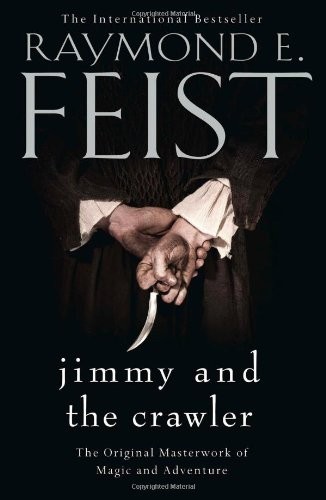
Jimmy and the Crawler UK HC 1st (2013)
Jimmy and the Crawler (2013)
UK: HarperVoyager · ISBN 978-0-00-751128-0 · £5.99 ebook / limited HC. Bridge novella between the Chaoswar Saga and the Firemane Saga.
Jimmy de Loungville attempts to rebuild the Mockers (Krondor's thieves' guild) after the Serpentwar devastation. The Crawler is the mysterious crime lord who has seized control in his absence. Required reading before A Darkness Returns — it establishes the political state of Krondor that opens the Dragonwar Saga. Published as a standalone; the physical UK HC is scarce and increasingly collectible. The ebook edition is the most common way readers encounter it.

Comics

The Wood Boy (Roaring Studios, Dec 2003)
Comic adaptation of the short story. Black-and-white interiors. Small-press run.
Roaring Studios was a short-lived small press. Print run was extremely limited; this remains one of the rarest Feist-related physical items. Few copies in collector circulation.
Magician Apprentice Marvel TPB
Magician Apprentice (Dabel Brothers / Marvel, 2006–2007+)
Comic adaptation of the first portion of Magician. Dabel Brothers Productions announced the project; Marvel Comics partnership followed in Sep 2006. Dabel split from Marvel Aug 2007; Marvel retained the license.
Covers Pug and Tomas's childhood in Crydee + the Battle of Crydee sequence from Magician. A projected third arc covering Pug's Kelewan training was announced but as of 2026 remains unpublished. Art quality is inconsistent across issues — early issues are the strongest. Collected trade paperback (ISBN 9780785128137) covers issues 1–12. Individual issue #1 unbagged with first-print cover is the most desirable single issue. The Dabel Brothers editions of any issues are extremely scarce.

Video Games

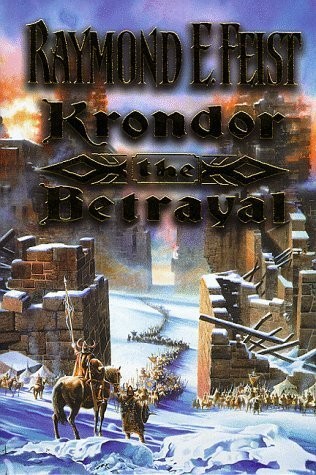
Krondor: The Betrayal UK 1st — novel tie-in
Betrayal at Krondor (Sierra / Dynamix, 1993)
Developer: Dynamix. Publisher: Sierra Entertainment. PC / DOS, 1993. 9 chapters. Original story by Feist — not an adaptation of an existing novel. Cover shown: Krondor: The Betrayal (novel tie-in, UK 1st).
Feist wrote the story specifically for the game, working with script author Neal Hallford. The game's plot was later expanded and novelized as Krondor: The Betrayal (1998). The US first edition HC of that novel includes the game on CD-ROM — a complete first requires the CD-ROM present and preferably unopened.
Released as freeware in 1997 and legally available via GOG.com. Widely regarded as one of the finest RPGs of the early 1990s — sophisticated combat, deep dialogue, and a fully realized open world.
Physical collector note: Original boxed DOS copies with full manual are increasingly scarce. Sierra Big Box editions with inner foam tray are most collectible.
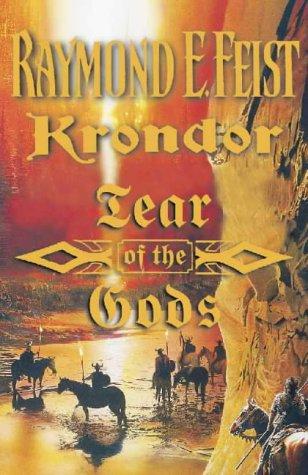
Krondor: Tear of the Gods UK 1st — novel tie-in
Return to Krondor (Sierra / PyroTechnix, 1998)
Developer: PyroTechnix. Publisher: Sierra Studios. Windows, 1998. 2 CDs. 5 playable characters · 11 chapters · 200+ locations · 60 spells · 180 motion-captured NPCs. Cover shown: Krondor: Tear of the Gods (novel tie-in, UK 1st).
James (Jimmy the Hand, now Duke) investigates the theft of a holy relic from a Keshian vessel. The story led to the novel Krondor: Tear of the Gods (2000/2001). Notably shorter and less acclaimed than Betrayal; released in a reportedly unfinished state following Sierra's financial difficulties.
Not available as freeware or on GOG as of 2026. Requires original Windows CD-ROMs to play. An unofficial fan patch restores some cut content.
Physical collector note: 2-CD jewel case with manual. Complete-in-box copies with intact CDs are worth preserving given the game's development history.

Tabletop RPG — Midkemia Press (1979–1982)

Midkemia was created as a tabletop RPG campaign world by Feist and his UCSD "Friday Nighters" gaming group c. 1976 — three years before the first published supplement and six years before Magician. The world existed first on paper dungeon maps, not in prose. These RPG products are the earliest physical artifacts of Midkemia and predate the novels as published objects.

Cities (1st Ed.) — Midkemia Press, 1979
64 pp. Authors: Abrams & Everson. First Midkemia Press publication. Most historically significant Midkemia artifact.
A system-neutral city-generation toolkit based on the actual Midkemia campaign. Describes demographic tables, encounter charts, and social structures extrapolated from Feist's gaming sessions. Predates any novel by three years. The 1979 first printing is extremely scarce; later reprints (Chaosium 1982, Chaosium 3rd Ed. 1986, Avalon Hill 1988) are far more findable.
The City of Carse (1st Ed.) — Midkemia Press, 1980
City sourcebook for Carse, a major port city on the Kingdom's west coast. Appeared in the novels — Crydee's region uses Carse geography throughout the Riftwar Saga.
System-neutral sourcebook. Reprinted by Chaosium for RuneQuest (1982) and in a 3rd Edition (1986). The 1980 first Midkemia Press edition is the rarest and most desirable printing; the Chaosium edition is more commonly found in used markets.
Tulan of the Isles (1st Ed.) — Midkemia Press, 1981
56 pp. Authors: Feist & Abrams. One of only two Midkemia Press supplements with Feist listed as a direct author.
Describes the island kingdom of Queg and surrounding waters. Feist's direct authorial credit makes this particularly significant for collectors. Reprinted by Chaosium (1987) for RuneQuest. The 1981 Midkemia Press edition is the true first.
The Black Tower — Midkemia Press, 1981
44 pp. Authors: Guinasso & Abrams. Dungeon adventure module set in Midkemia.
A playable dungeon scenario in the Midkemia campaign world. Least reprinted of the Midkemia Press line; scarcer than the sourcebooks in collector markets.
Towns of the Outlands — Midkemia Press, 1981
72 pp. Settlement sourcebook for wilderness regions outside the major Kingdom cities.
Detailed encounter tables and NPC tables for the frontier territories that form the backdrop of many Riftwar Saga scenes. Provides the implied geography between Crydee and the interior cities.
Jonril — Midkemia Press, 1982
68 pp. Authors: Abrams & Feist. Gateway city to the Northlands. Second supplement with Feist as listed author.
Published the same year as Magician. Jonril appears in the novel's maps and backstory as the northern gateway where Murmandamus's forces gather. The dual authorship with Feist makes this the second most significant Midkemia Press title for collectors after Tulan.
Heart of the Sunken Lands — Midkemia Press, 1982
Adventure module set in the dangerous interior swamplands south of the Kingdom.
Final original Midkemia Press product before Chaosium acquired the license. The swampland setting corresponds to the vaguely-defined southern regions referenced in the novels. Rarest of the Midkemia Press adventure modules.
Republications — Chaosium / Avalon Hill
Chaosium republished Carse (1982), Cities 3rd Ed. (1986), and Tulan of the Isles (1987) as RuneQuest supplements. Avalon Hill published RuneQuest Cities (1988).
Collector hierarchy: Midkemia Press 1st editions > Chaosium RuneQuest editions > Avalon Hill edition. Chaosium editions are far more common in used markets. None of the Midkemia Press titles have been reprinted in digital form as of 2026. The Chaosium RuneQuest Carse (1982) is the most available entry point for readers who want the original world material without paying first-edition prices.

Essays & Blog (crydee.com)

crydee.com has been the official Feist fan site since 2002, run by a fan named John under Feist's authorization (confirmed Jan 2007). Feist contributed several personal essays that offer unusually direct access to his views on craft, character, and life.

On Principle, Morality, Ex-Girlfriends, Kids, and Villains (Nov 2003)
Inaugural crydee.com essay. Core argument: effective villains are protagonists in their own narratives — they must believe in what they are doing.
Feist discusses Guy du Bas-Tyra, Macros the Black, and Kahil (Empire trilogy) as case studies in internally coherent antagonists. Distinguishes between villains who are "merely evil" and those with logical internal consistency. Seminal statement of his character philosophy — explains why Feist's antagonists are often more compelling than his heroes.
Why? (May 2005)
Ray's Axioms on character motivation. Core rule: character logic trumps reader expectation.
"It doesn't matter if what your character does makes sense to the reader, as long as it makes sense to the character." Discusses how he constructs internal character logic rather than plotting toward reader expectations. Uses Arutha's decision-making in A Darkness at Sethanon as a primary example. Key text for understanding why Feist's characters sometimes make choices that frustrate readers expecting conventionally "heroic" behavior.
On Politics and Characters (Mar 2008)
Character study in political leadership. Subjects: Arutha, Martin conDoin, Guy du Bas-Tyra, Kaspar of Olasko.
Feist argues that a character's political decisions reveal more about their essential nature than combat or magic. Particularly valuable discussion of Guy du Bas-Tyra as a pragmatist who makes correct decisions via morally ambiguous means — a character consistently misread by first-time Magician readers. Published during the Darkwar Saga period.
Ghosts and Echoes (Aug 2009)
Personal essay on clinical depression and recognizing false cognitive distortions. Title misspelled "Echos" in the original — Feist's own misspelling, preserved on the site.
Unusually personal piece in which Feist discusses a depressive episode and the cognitive work required to separate genuine perception from distorted self-assessment. Not strictly about writing; reveals the introspective side of his personality rarely visible in the novels. The most personal publicly available statement Feist has made about his internal life.
Barbara A. Feist 1916–2010 (Mar 2010)
Obituary and tribute for his mother, who hand-typed every page of his original Magician manuscript before word processors were accessible.
Barbara Feist died February 28, 2010 at age 93. Without her labour of typing his handwritten pages into a submittable manuscript, Magician might never have reached Doubleday. The essay reframes the novel's creation as a family collaboration rather than a solitary achievement. Essential context for understanding why Feist's acknowledgements pages are always unusually warm.
A Light Between the Heavens (WIP, 2026)
Feist's current working project as of April 2026, mentioned in an update on crydee.com.
No publisher announcement, release date, or confirmed series placement as of June 2026. Feist mentioned it as an active writing project. Whether it will be part of the Dragonwar Saga or a new direction is not yet clear.